Money Jars and Teaching Kids about Finances
Teaching Kids about Finances can be tricky. I’m sharing 10 ways to help your kids learn about and understand finances, plus how to make these money saving jars.
The product link below is provided for your convenience. I get a small commission if you purchase, but there is no additional cost to you.
It’s never too early or late to start teaching kids about being responsible with money. Just start now! When our kids were young we helped them understand finances by making money jars for their allowance and other money they received. They began dividing their money into separate jars and learning about setting financial goals from the very beginning.
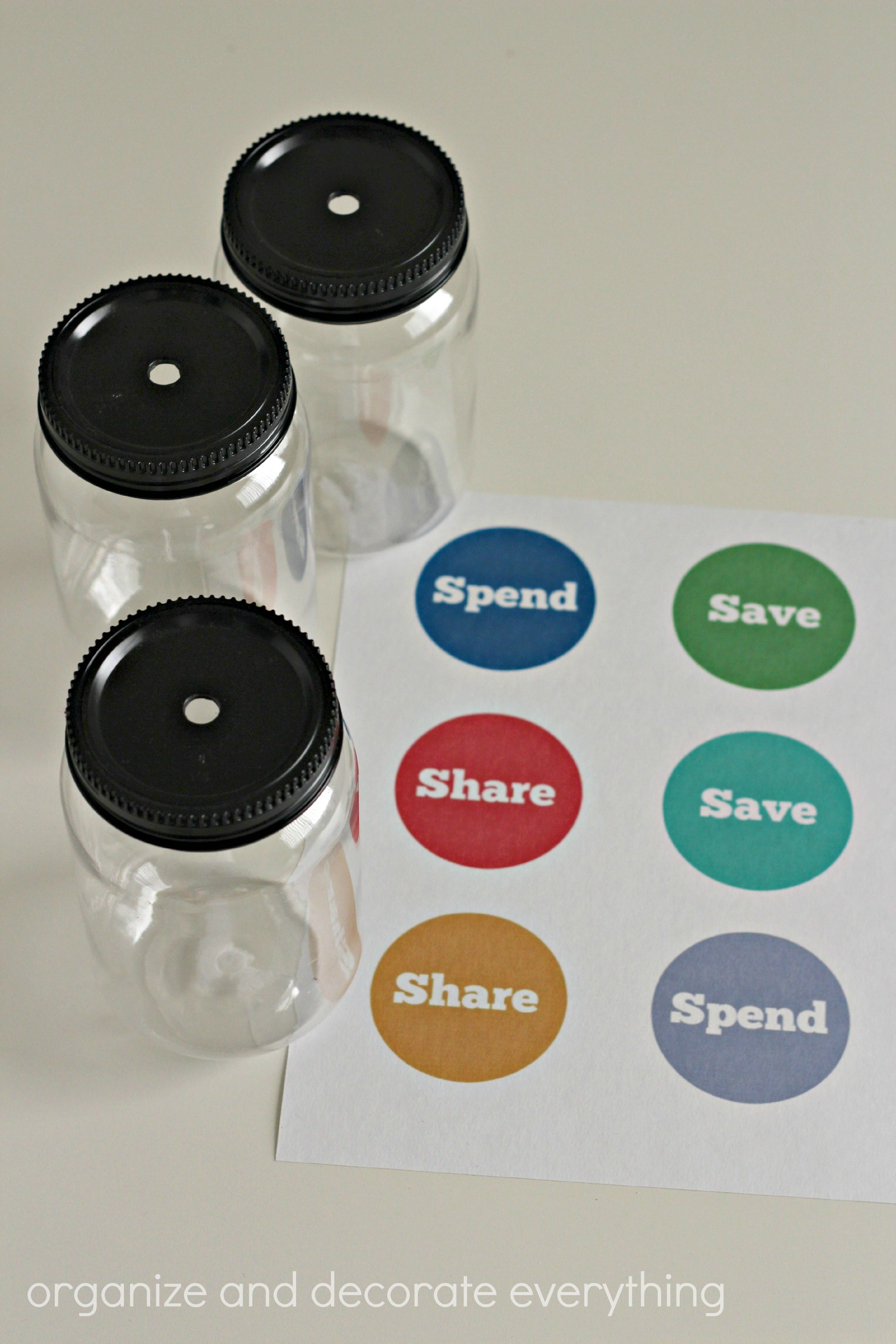
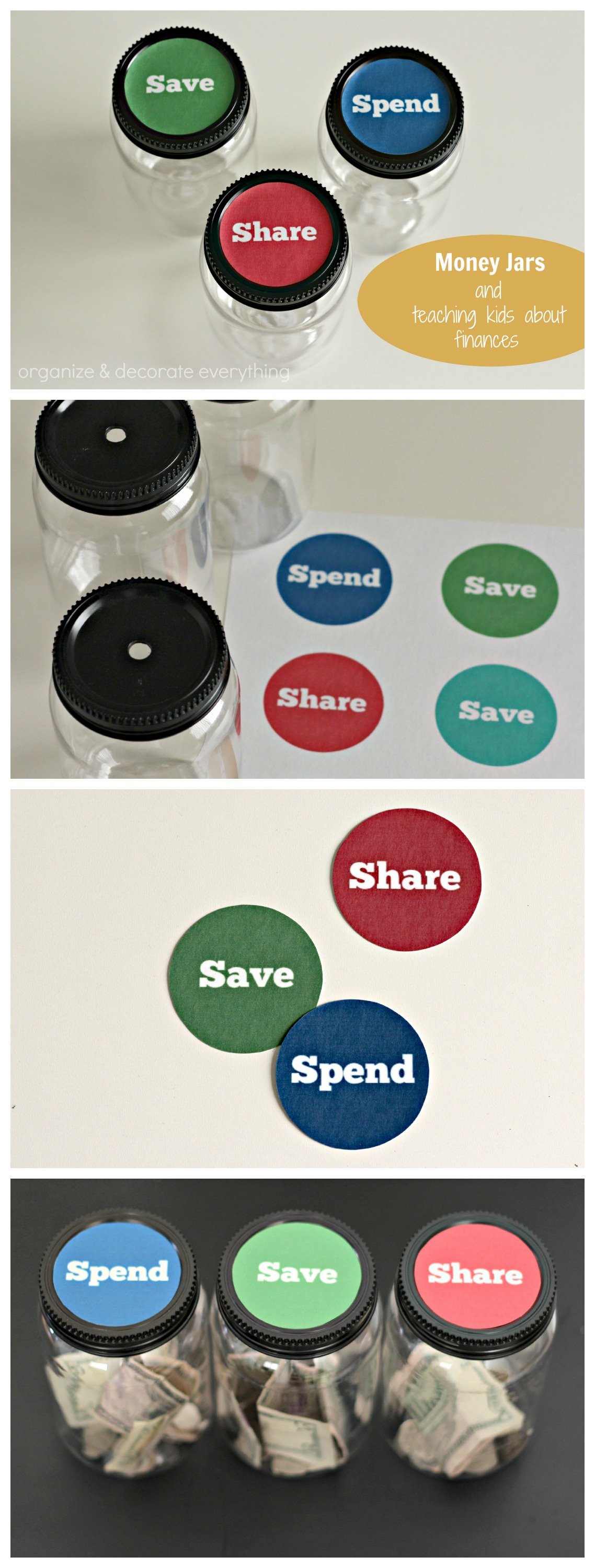
Use plastic mason jars with lids to make the money jars. Similar jars can be purchased at WalMart, Target, Dollar General or Dollar Tree. These have a small hole in the lid but it doesn’t matter because it will be covered. You can also purchase slot coin lids on-line if you prefer.
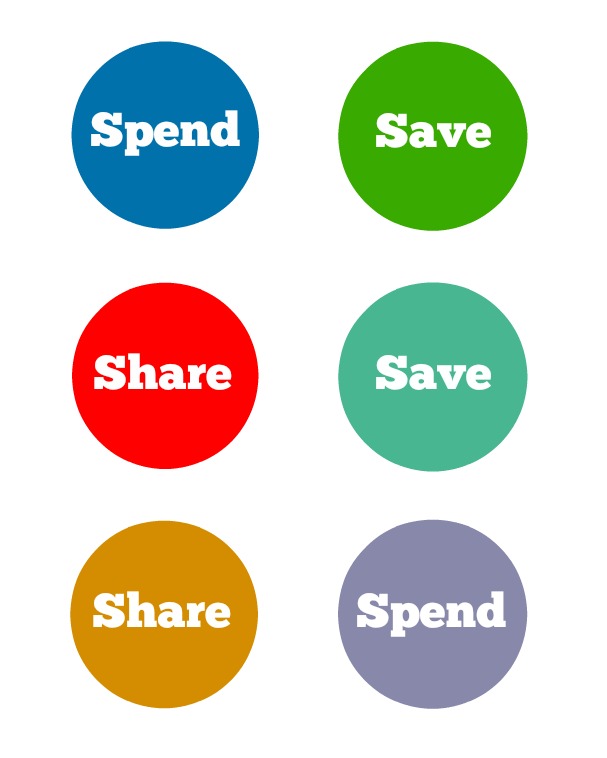
I made a printable in a few different colors for your use. Print off the whole sheet below and use the ones you prefer. If you choose to use the slot lids just adhere the tag to the front of the jar.

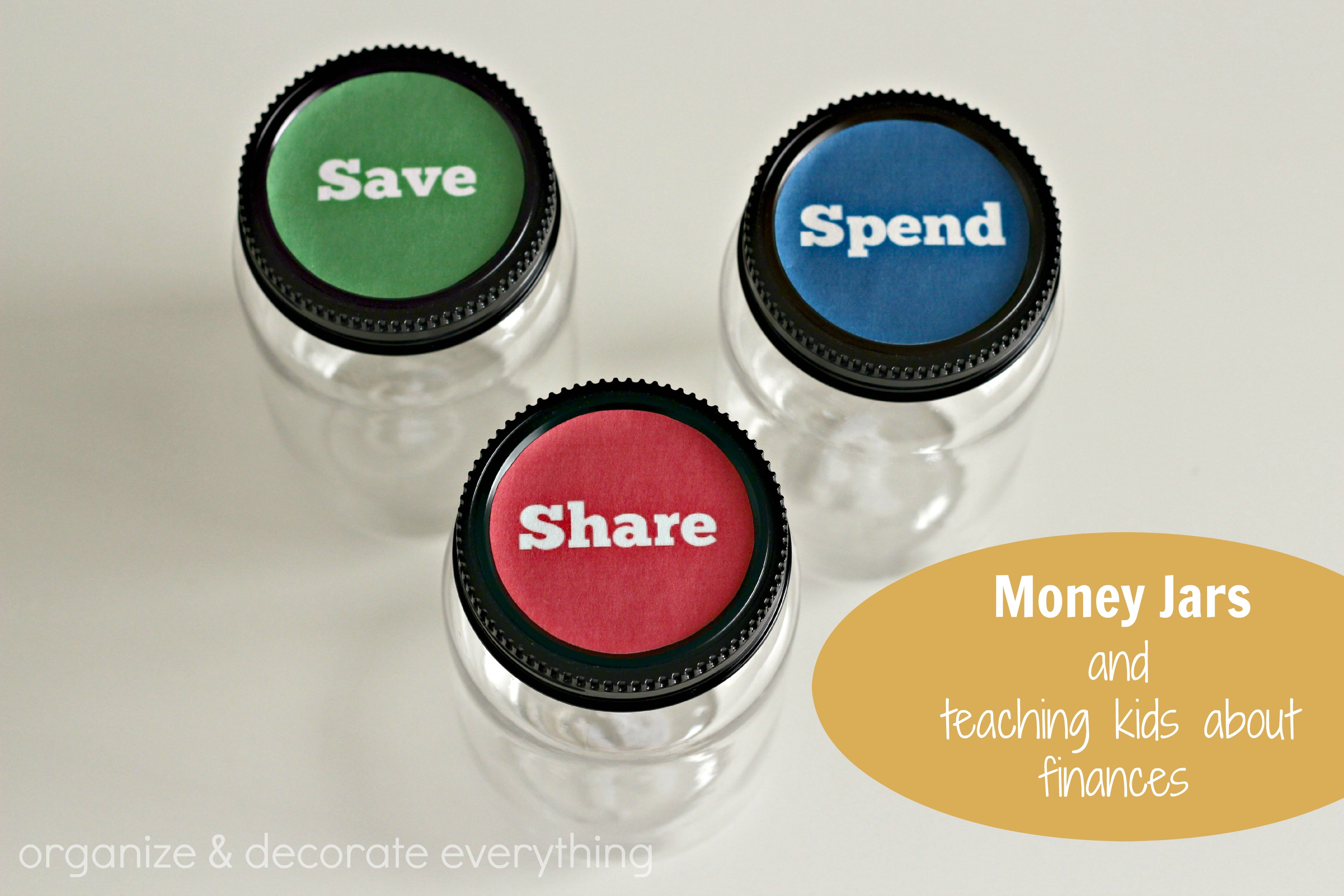
Print out the jar lid printable and cut out your color choices. One of my kids chose red, blue, and green so this is how his jars look.
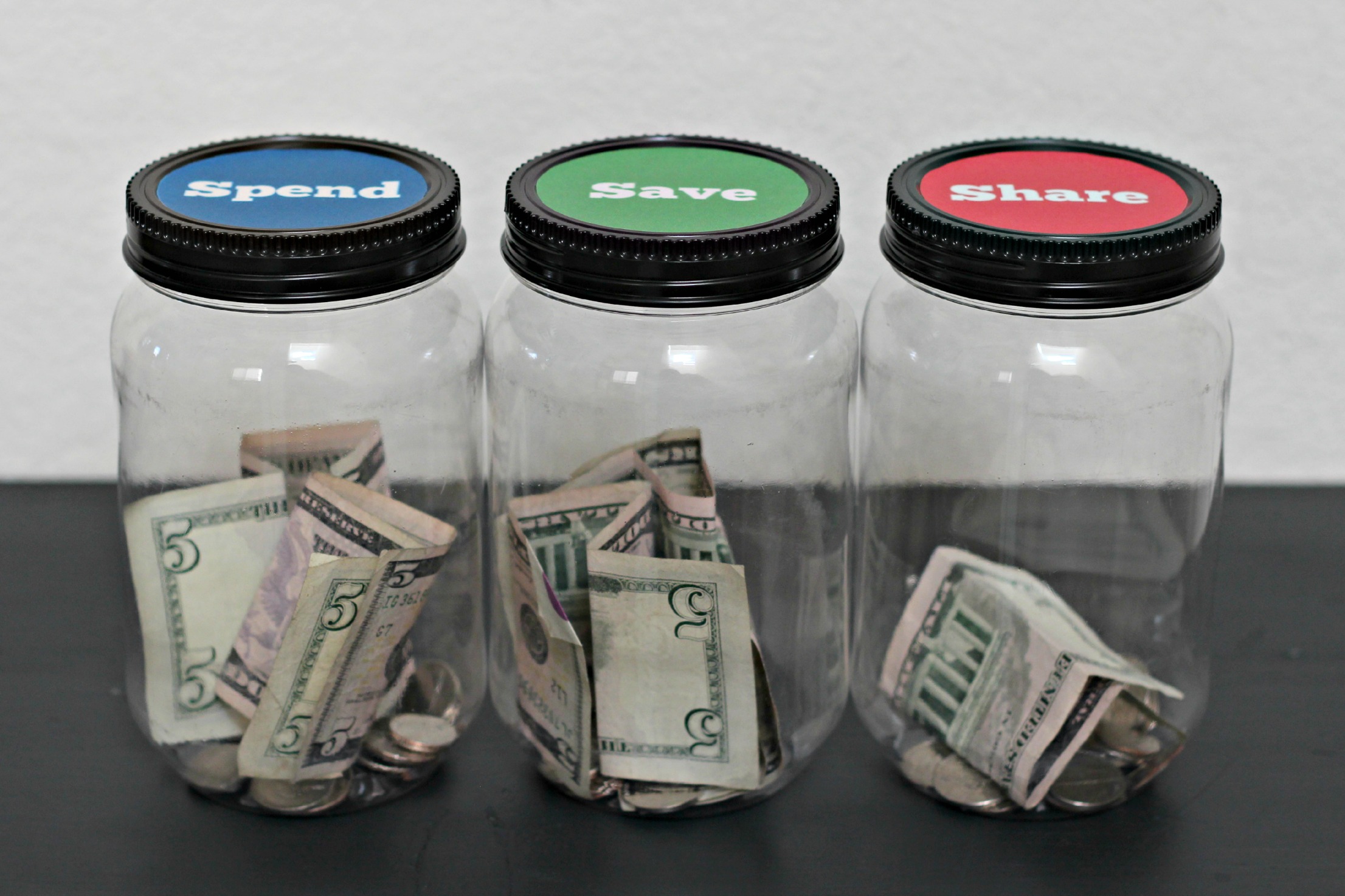
The concept we use is very simple. For kids, the easier the better. Here’s an example: $10 for allowance, $1 goes to Share which in our case means tithing (it can also be used for other kinds of donations), $5 goes to Save and $4 goes to Spend. Divide the money how it works best for your child. Extra money such as birthday or holiday money can also be divided between the jars.

Money Jars and Teaching Kids about Finances
Here are 10 more ways to help your kids learn about and understand finances.
1- Take advantage of teachable money moments that can happen at any time. Look at ads and talk about small and large buying decisions. Compare prices and quality at stores, on line and in publications. You can even make it a game at the store by having a competition to find the best price of a certain item.
2- Teach finances according to your child’s age. Age 3-5: Create money jars and teach them about saving and spending. Have your child set a goal to save towards something, but not too high. It needs to be attainable so they can see the reward of saving for something they really want. Help them count their money when it’s being added to the jars so they can see their progress. Age 6-10: Give your child a little money while grocery shopping and let them make comparisons on brands and/or generic products. Talk about decisions, buying things on sale, and comparison shopping.
Age 11-13: Start talking about compound interest and have them do a few calculations for better knowledge. Encourage them to save their money for something more expensive, instead of spending their money on a lot of smaller items. Age 14-18: Talk about college education and how much it will cost. Have them start earning money through a part-time job or odd jobs such as lawn care or babysitting. Teach them about credit cards and how to limit their use and use them wisely.
3- Teach the differences between needs and wants. Help them understand they don’t have to purchase everything they want just because they have money to do so.
4- Help them set money goals. They can’t obtain a goal they don’t set.
5-Give your child their allowance in small denominations so it’s easy to divide between all the jars. Anything to make it easier on them and be able to help them make choices.
6- Let them make small spending decisions whether they’re good or bad. They will learn from the experience. All children are different and I have some very good at money decisions and some not as good. It can be a learning experience.
7- Keeping track of spending can be as simple as writing down a purchase on a small slip of paper and placing it in the jar to replace the money that was removed. This can be a great learning experience in deciding the difference between wants and needs.
8- Once they get older you can get more detailed about finances. Talk about credit card purchases, interest rates, paying off credit card debt, verifying charges, calculating tips, etc.
9- Have family discussions about finances. Include the kids in the discussions to help them understand and be included in some financial decisions.
10- Take a trip to a financial institution. Once your child’s Savings reaches a certain amount, talk about placing it in a savings account and continue to add to it. Most institutions would love to talk to your child about opening an account and saving for the future.
Start talking to your kids about finances as early as possible. The earlier in their life, the better understanding they will have. The main goal is to prepare them for financial understanding by the time they leave your home. I wish I would have been better at this with my older kids. Anything you can offer will give them a better start and a better understanding.
If you would like this free Save-Spend-Share printable just click on the link below the picture.
Pin it for later: Money Jars and Finances
You might also like these posts:
Great Ideas for Organizing Kids Stuff
Kid Packing List Printable